Annual report looks at key indicators of regional homeless response
By Gary Warth
July 1, 2026
More area homeless people are finding permanent housing and fewer people are becoming homeless for the first time, according to a new report from the Regional Task Force on Homelessness.
Returns to homelessness also declined from 2023 to 2025, suggesting more people are finding stable housing, while the number of people accessing services has increased but slightly leveled off.
The Homelessness Crisis Response System 2025 Data and Performance Report, compiled annually by RTFH, reviews key indicators and three-year trends from reports by service providers in the system, which include temporary and permanent housing, shelters, outreach, homelessness prevention and various other services.
The latest report found many people, especially adult-only households and seniors, continue to experience long periods of homelessness before exiting the system for housing.
While there were overall improvements in the number of people who found permanent housing, results varied by household compositions of race, ethnicity and subpopulation.
“Taken together, these trends highlight both the system’s ongoing efforts to move people into stable housing and the importance of targeted strategies to reduce the length of homelessness, prevent first-time homelessness, and strengthen long-term housing retention,” the report concluded.
Among the key findings in the three-year report:
- Exits to permanent housing increased from 23% to 29%
- Exits for permanent housing for veterans increased from 24% to 53%
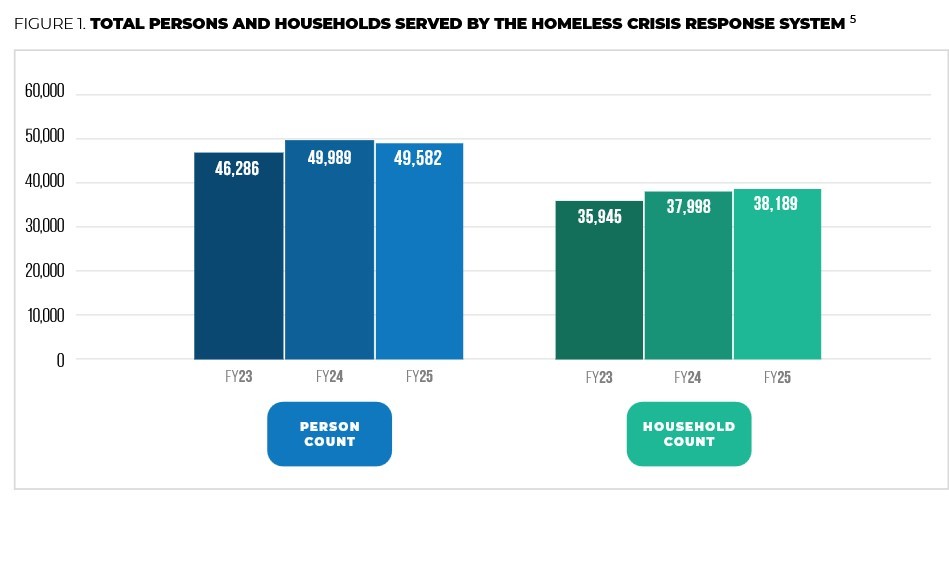
- Households accessing services increased from 35,945 to 38,189
- Individuals accessing services increased from 46,286 to 49,582.
- Average days of homelessness increased from 185 to 193
- Returns to homelessness within two years decreased from 25% to 21%
- Returns to homeless within 6 months decreased from 11% to 9%
- First-time homelessness dropped from 5,590 to 5,290 for people in emergency shelters, safe havens and transitional housing.
The data showed positive gains in some areas, but continued challenges in others.
Shelters, other services in demand
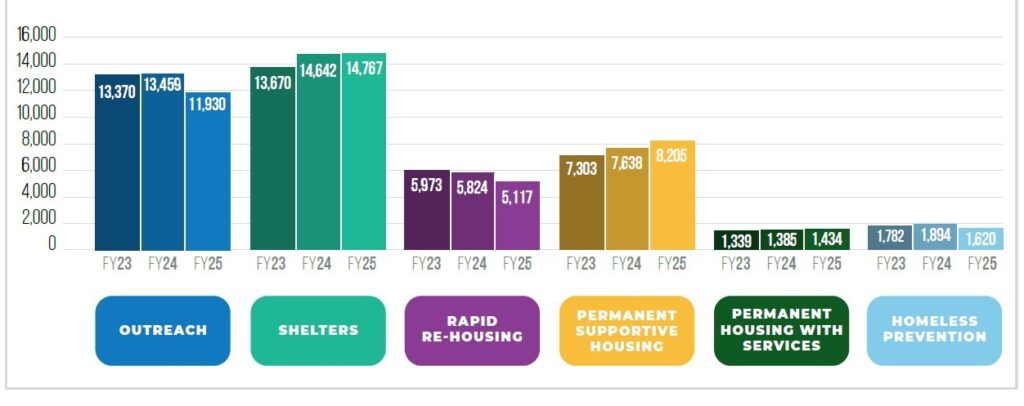
Shelters were the most-used service over the three years, and the number of clients served grew about 8%.
The number of households accessing services steadily increased each fiscal year and was part of an overall increase in people turning to the crisis response system for help.
Greg Anglea, president and CEO of Interfaith Community Services in North County, said there has been an increase in demand for services, especially among seniors and families.
“When it comes to family homelessness, the cost of living is the number one factor,” he said. “And when we think about families who have lost their housing, the high cost of a two- or three-bedroom apartment is another really big impediment. And so families have to put together a really high income not just to afford a new apartment.”
Anglea said Interfaith works closely with their partners to help families find landlords who will rent to them so they can move out of homelessness and into homes.
Not all trends identified in the report were steady. The number of individuals accessing services increased 8% from Fiscal Year 2023 to FY 2024, but then declined 1% in FY2025.
Permanent supportive housing and permanent housing with services for disabled people had noticeable increases, pointing to continued growth in longer-term housing interventions.
Homeless prevention services increased in FY2024, although the gain was offset by a larger decrease the following year.
There were exceptions to the increased demand for services.
Outreach services dropped by about 10% over three years, and the number of people in rapid re-housing, a type of permanent housing that provides short- and medium-term rental assistance, decreased by 14% overall.
A demographic breakdown of people who received services shows a 12% overall growth among youth, a 3% increase in veterans and a 7% increase in seniors 55 and older.
The number of individuals in families who received services increased over three years, with a significant jump in FY2024 followed by a slight drop in FY2025.
Leaving homelessness for housing
Much of the report focuses on housing and the demographics of people housed, which are considered important measures of performance within the homeless response system.
Exits from homelessness to permanent housing increased over the three years, with adult-only households showing the most improvement. Taken together, exits to permanent housing rose from 23% to 29% for all households.
Among subpopulations, veterans showed the largest increase in exits to permanent housing, which rose from 30% to 42% over three years.
Among the veterans who have received housing and services recently, Catherine Cainis a decorated combat veteran who was dealing with alcoholism and PTSD while homeless on the streets of downtown San Diego before finding help.
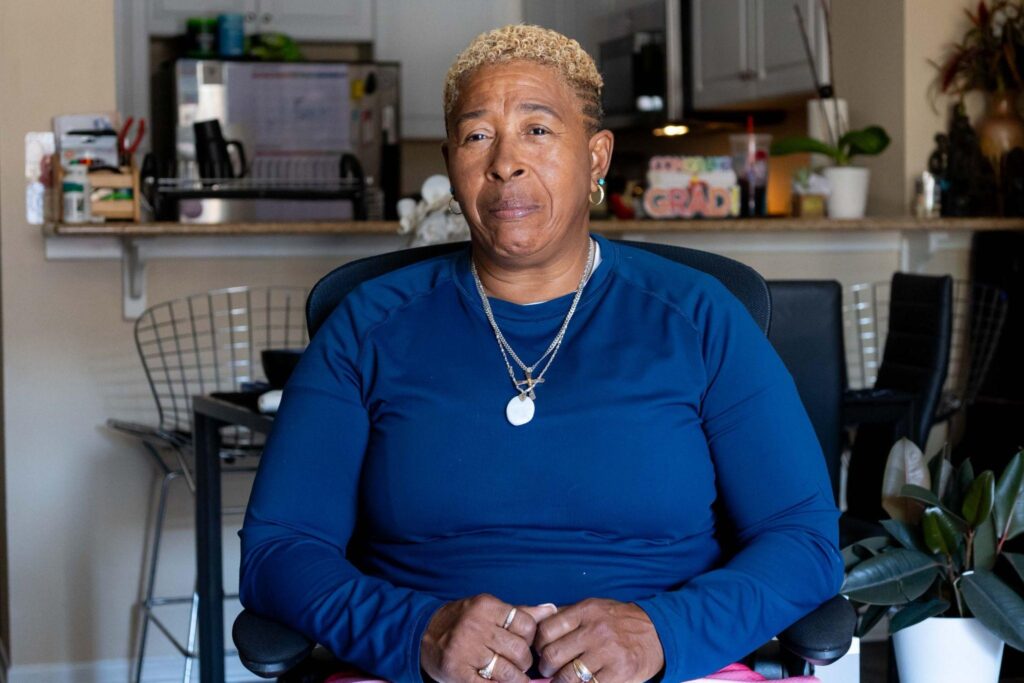
“I hooked up with other veterans and, finding my community, this one guy told me when you’re ready to get off these streets, Veterans Village of San Diego can help you,” she said. “It took me seven years to walk in and say, ‘Hi, I’m a veteran and I’m here.’ And when I walked through those doors, a plethora of things started to change.”
Cain said she couldn’t believe how fast she received help, including receiving a Veterans Affairs Supportive Housing voucher, housing placement through Brilliant Corners and other help from PATH.
“People need to understand one thing,” she said. “There’s always help. It’s just how bad do you want it?”
A recent graduate with honors from Palomar College, Cain said she is working toward earning a degree in sociology, and at 60 years old she was recently accepted into Hampton University in Virginia.
As with veterans, youth and seniors 55 and older also had increases in exits to houses, although the growth among seniors was more modest.
Success in permanent housing also is measured through how long a person stays after moving in, and different services have different outcomes.
Street outreach showed the strongest improvement, increasing from 24% to 53%, which suggests more people are moving directly from encampments and into housing.
Exits to permanent housing from shelters and rapid re-housing increased in FY2024, but the gain was slightly offset by a decline the following year.
The retention rate of people who moved into permanent housing remained high, with between 94% and 96% of people remaining housed through the reporting period.
Yvonne Warren is among the formerly homeless San Diegans who were housed in recent years.
“I don’t like the streets,” she said, adding that she did not feel safe living without shelter.

Warren said she had been homeless most of her life, but moved into Harrington Heights in late 2025. The 270-unit, 15-story building was developed by the nonprofit Chelsea Investment Corporation in partnership with the San Diego Housing Commission.
“It’s very beautiful because it’s a brand new building,” she said. “I can make chile relleno, my favorite food.”
Warren said her favorite part of living in her new home is its cleanliness and her feeling of independence.The Alpha Project provides services at Harrington Heights, and Warren also frequently visits the Gary and Mary West Wellness Center operated by Serving Seniors to sociology and receive other services.
Fewer returns to homelessness
Some people did fall back into homelessness, but at a slightly lower rate. A slight drop in numbers found 21% of people still returning to homelessness, suggesting some improvements had been made in housing stability but more post-exit supports were needed.
The report also looks at what services people received before they were housed and later returned to homelessness.
Most project types saw decreasing rates of people returning to homelessness. Outreach, emergency shelters, transitional housing and permanent housing all saw a declining rate of people returning to homelessness, with transitional housing showing the greatest improvement with a drop from 31% to 18%.
First-time homelessness down
While the number of people in shelters had increased over three years, the report found a positive trend in the number of sheltered people who were experiencing homelessness for the first time.
Within shelters, the number of first-time homeless adult-only households, by far the largest population in shelters, dropped from 4,622 to 4,239 over three years.
Sheltered households with adults and children saw a 9% increase in first-time homelessness and households where all members were 17 or younger had a slight increase.
The report also found overall declines in first-time homelessness at safe havens, transitional housing and permanent housing projects.
The number of first-time homeless veterans in shelters and permanent housing dropped 14%, the largest decline among subpopulations, while first-time homeless seniors 55 and older had a 6% overall drop and youth in the same category dropped 9%.
The report also found the average days of homelessness for all households except veterans had increased from 185 to 193 days, with seniors 55 and older averaging the longest at 234 days in FY2025.
All adult-only households including seniors experienced an average of 202 days of homelessness in FY2025.
Also in FY2025, veterans had an average of 206 days of homelessness, down from 224 days the previous year, and youth had an average of 172 days, a steady growth from 150 days in FY2023.
