Church, college property could be key to expanding housing
By Gary Warth
Aug. 21, 2026
Land cost, red tape and NIMBYism are among obstacles said to have stymied the development of affordable housing in California, but community advocates and state legislators may have found ways to overcome those barriers and create thousands of units in the near future.
Locally, the San Diego City Council in 2019 approved updates to the city’s Land Development Code that allows churches to build affordable housing on their parking lots.
On the state level, a two-year-old bill streamlines the process for building affordable housing on property owned by faith-based organizations and non-profit colleges, creating a potential to develop almost 1,500 parcels in San Diego County alone.
Other new legislation has streamlined the development process even further, and some organizations are taking the initiative on their own to create affordable housing on their property.
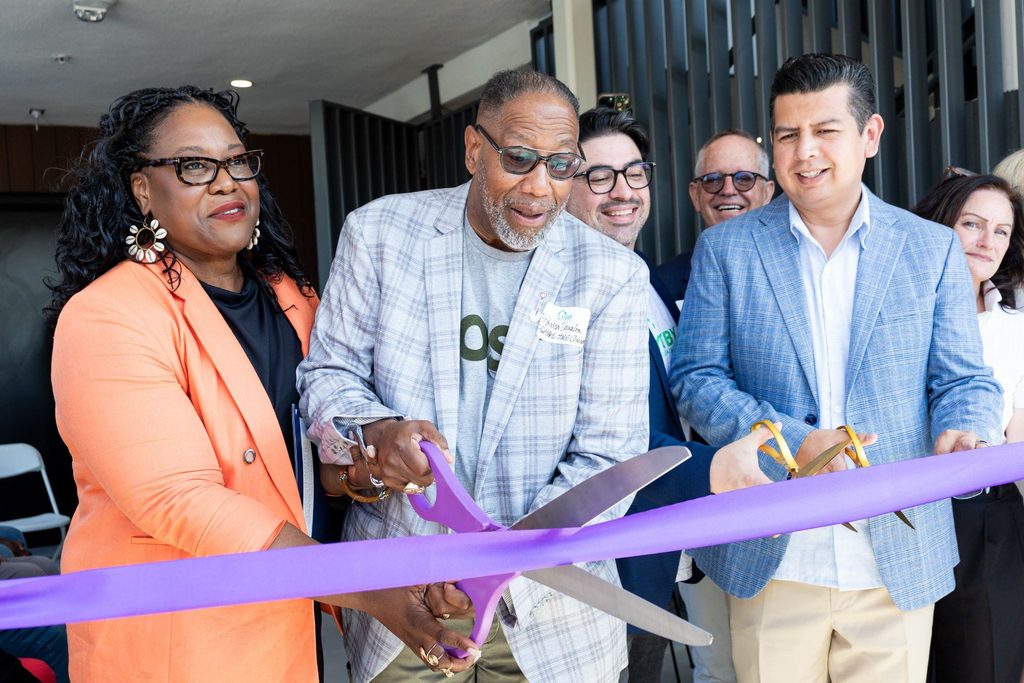
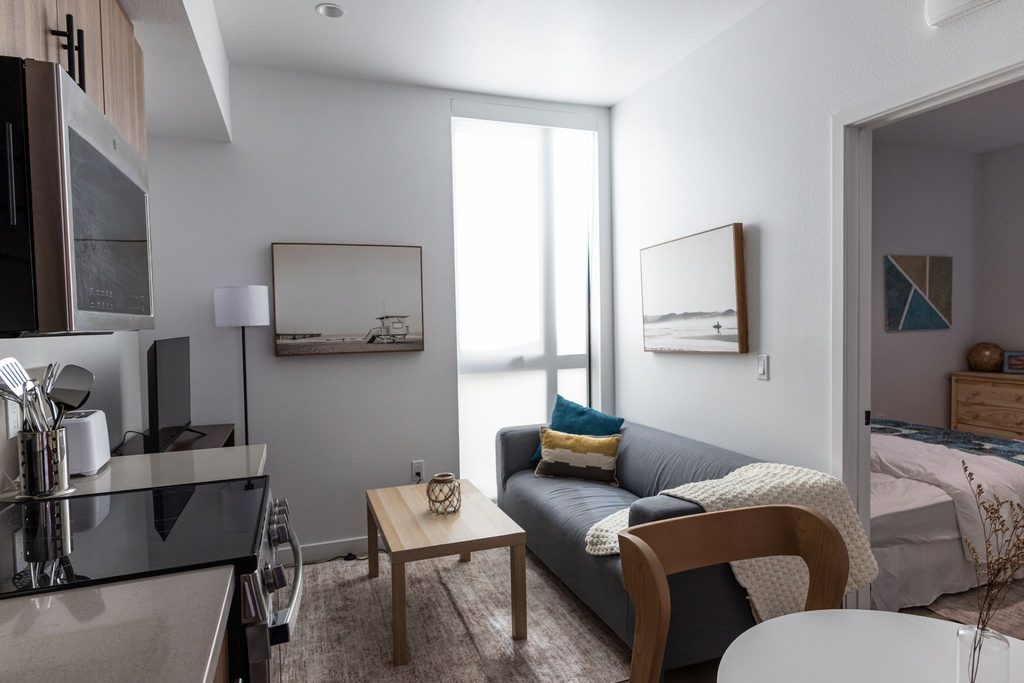
Turning the familiar “Not in my neighborhood” (NIMBY) cry on its head, the local nonprofit YIGBY (Yes In God’s Back Yard) built a 26-room apartment building on church-owned land near Bethel AME Church on Imperial Avenue in Grant Hill to provide housing for homeless veterans.
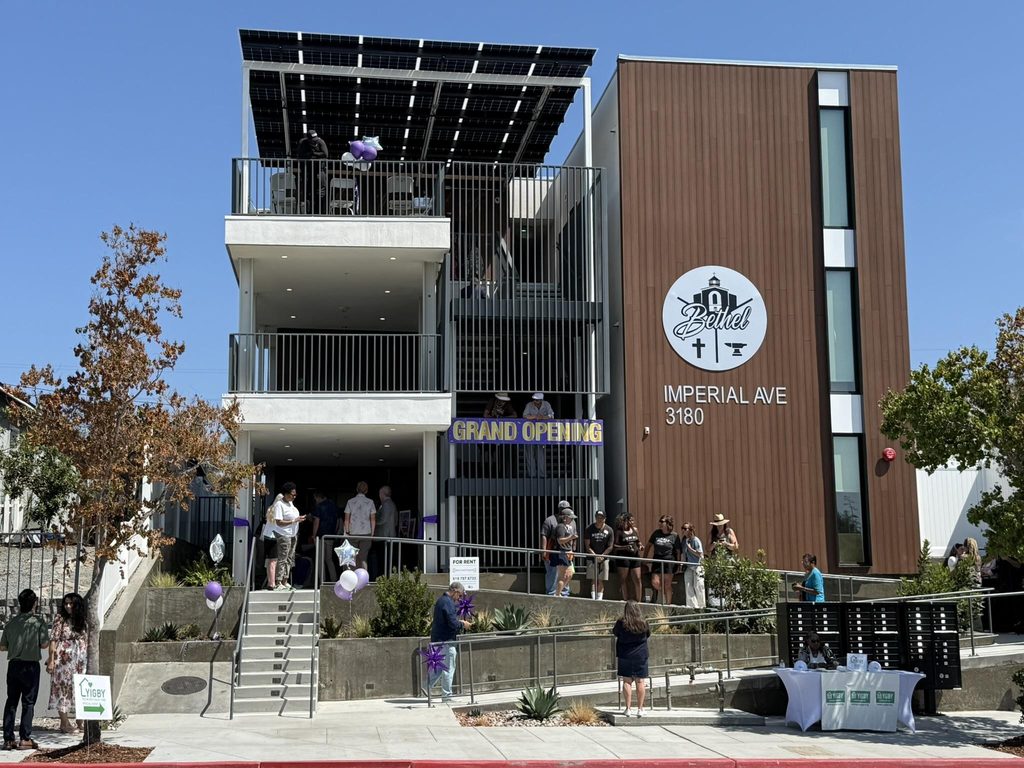
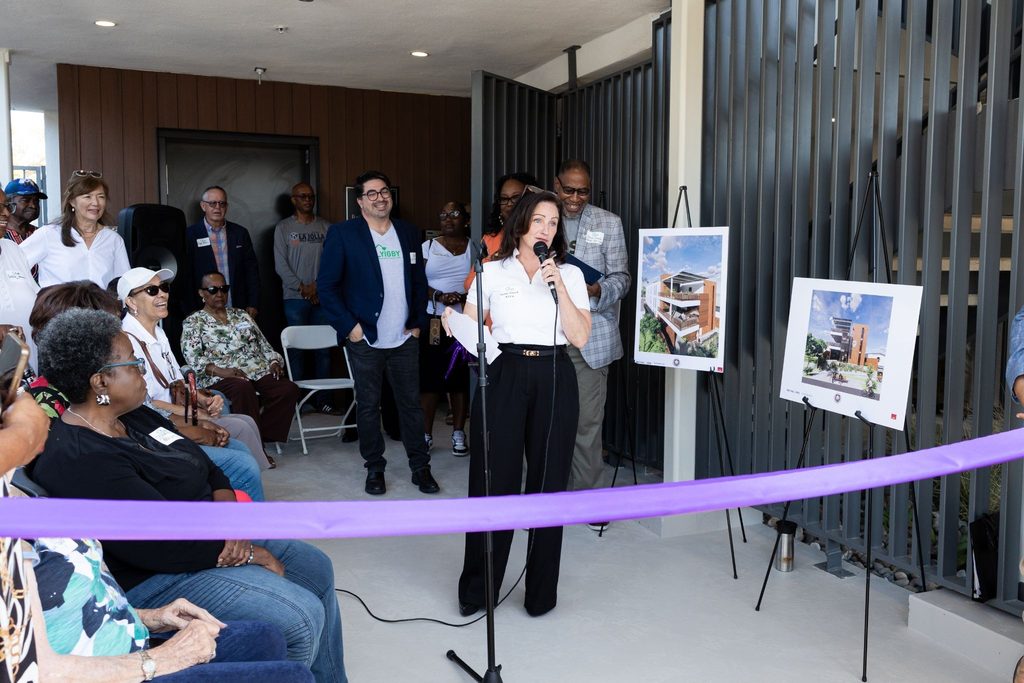
“I think the importance of this work cannot be overstated,” RTFH CEO Tamera Kohler at the Aug. 21 ribbon-cutting of the Bethel project.
Kohler said the concept and partnerships behind the project sets an example that could be replicated to make a serious impact on homelessness and affordable housing over time.
“I think we bring an important model and prove the concept here in San Diego with YIGBY,” she said. “All of my work is usually NIMBY. ‘Not here, not now, not in our backyard.’ And there is no way wecan address and end homelessness without housing.”
Kohler said housing ends homelessness, and the YIGBY model drives to the heart of trying to accomplish that mission.
“This is a transformational model,” she said. “We hope it goes region-wide. We see it in every community, large and small.”
Kohler also recognized “the dual role of compassionate, intentional property manager and owner who works to partner with organizations to prevent homelessness as well.”
“My job, our job, would be so much easier if we could prevent people experiencing homelessness,” she continued. “Especially our seniors, our veterans and others. This compassionate, appropriate approach where it is affordable, but also focused on prevention is the way forward.”
Catholic Charities also is planning a housing project on property it owns in Mission Hills using a new type of building material that will make the 20-studio building more affordable to construct.
Realistically, the two projects won’t make much of a dent in the region’s needs. The San Diego Housing Commission has reported that 100,000 more affordable homes must be created by 2030 to meet projected demands.
New legislation that streamlines the development process for affordable housing could help fill that gap.
California Senate Bill 4 went into effect in January 2024 and provides automatic exemption from California Environmental Quality Act restrictions for affordable housing projects on land owned by faith-based organizations and nonprofit higher education entities.
While CEQA was adopted in 1970 as protection from development that could harm the environment, housing advocates and others have said it has been misused at times for NIMBYism, causing projects to be delayed, modified or canceled.
SB-4 has not had a big impact on the state so far, said J.T. Harechmak, policy director for the Nonprofit Housing Association of Northern California.
“Housing development takes a while,” he said. “People take a while to line up all of their funding, and people take a while to get things through to the preliminary stages. So what we’ve seen with SB-4 have been smaller developments that people are doing, things like five to 12 units in the backyard of a faith community.”
While it may be slow coming, Harechmak said SB-4 has potential for creating a significant amount of affordable housing in the state.
A UC Berkeley Terner Center study found SB-4 could pave the way for more than 171,000 acres of affordable housing.
“That’s about an acre for every homeless person in the homeless counts we had in 2023,” Harechmak said.
The report identified 4,000 potential acres and 1,128 parcels for development on land owned by faith-based organizations San Diego County. Nonprofit colleges in the county account for another 5,144 acres and 342 parcels for development.
“I am very hopeful,” Harechmark said about the potential impact of SB-4. “I think as people become more comfortable with this and we see more successes of local communities engaging in something like this, I think that it’ll be contagious.
“I think that people will see that it is an effective way to build housing and to also kind of serve the faith-based ideal of serving the community. But it’s going to take success stories for things to really build up people’s comfort with the idea, and that’ll take some time. And that’s okay.”
Before SB-4 was passed, Harechmark said, the Nonprofit Housing Association of Northern California worked with faith-based partners in their coalition who were interested in developing housing on their sites, but had been stymied by CEQA lawsuits, complaints from neighbors and difficulties with local government boards.
“The CEQA streamlining allowed them to sidestep a lot of that process, which then cut down on the time that it takes for them to do something like this and also the cost that is required in doing something like this,” he said.
“This is a faith community,” he continued. “They are not necessarily people who are well versed at the local zoning board for developments. So taking a lot of that process out of there makes it a lot easier for a small faith community to find a good developer to partner on something and to proceed without a whole lot of derailment from people who could be involved in denying their applications.”
Harechmark said the NHANC also worked with the trade groups on Assembly Bill 2011, which became law in 2012 and exempts affordable housing projects and mixed-income projects built in commercial corridors from CEQA review.
That bill also required construction workers to be paid prevailing wages and, for projects with 50 or more units, to also provide health benefits and participation in apprenticeship programs.
The process to build affordable housing became more streamlined this year. Two proposed bills, AB-130 and SB-130, also updated CEQA and eliminated the requirements for health benefits and apprenticeship programs in AB-2011, but kept the prevailing wage requirement.
Rather than going through the usual process for bills, they instead were included in the new fiscal year budget so became effective July 1 of this year.
Harechmark said he is curious if the new CEQA update will affect participation in SB-4, which still requires the same condition from AB-2011.
YIGBY is one group that could benefit from the new laws to fulfill its mission statement “To transform underutilized land into thriving, inclusive communities by empowering faith-based institutions to become long-term stewards of deeply affordable and supportive housing.”
“I’ve got a heart for homelessness and trying to find ways to do affordable housing,” said Doug Austin, founder of the architecture firm AVRP Studios and chair of the YIGBY Steering Committee.
YIGBY worked with Bethel African Methodist Episcopal Church (Bethel AME), San Diego’s oldest African American church, to build on the property it owns on Imperial Avenue.
The church became YIGBY’s first faith-based partner in 2020, and Austin said the project and its design has evolved over the years.
“They’d already been trying some things and they kind of got off on the wrong foot,” he said, explaining how the original approach was a modular design using crates, which turned out not to be cost-efficient
AVRP Studios did a pro-bono redesign of a 16-unit duplex, and LPA was hired as the architect of record to build what Austin called a more cost-efficient 26-unit project to house veterans with Veterans Affairs Supportive Housing (VASH) vouchers.
Funding included $80,000 from RTFH toward a $120,000 elevator. YIGBY also is hoping for a second project near the Bethel AME site, and Austin’s company also has done pro-bono work for a 35-unit project planned with Ascension Lutheran Church in Allied Gardens.
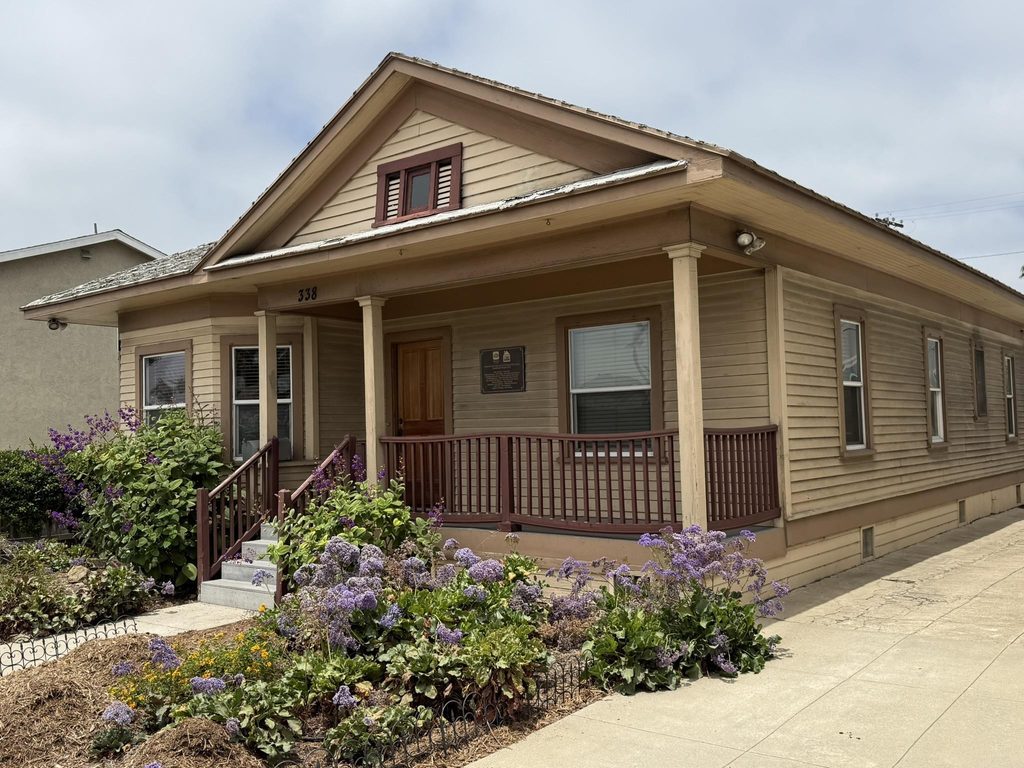
Also in San Diego, Catholic Charities has plans to demolish a single-story home it owns on West University Avenue in Mission Hills and redevelop the site as Casa Maria, a 20-unit building that can house about 30 people.
Appaswamy “Vino” Pajanor, CEO of Catholic Charities, said the plan is to use a new building material called FERMBLOC, an insulated concrete form that will allow the project to be built for $232,000 or $250,000.
As of early September, Pajanor said they still had not received International Code Council certification paperwork for the material . Once it is in hand, he said they will revise the design and costs of the project.
Because the new units will replace a residential project already owned by Catholic Charities, Pajanor said benefits from the new legislation won’t be needed.
The existing building is an independent living facility that houses four women, and the new project will serve a similar population.
“It will be for women who are trying to stabilize their life, but also working women who can’t find affordable or safe and secure places to build their professional careers,” Pajanor said.
Catholic Charities also operates Rachel’s Apartments, providing temporary housing for seven women in recovery, and Pajanor said the new project will continue the nonprofit’s focus on helping women stabilize their lives.
