Coalition raises awareness about housing affordability
By Gary Warth
May 15, 2026
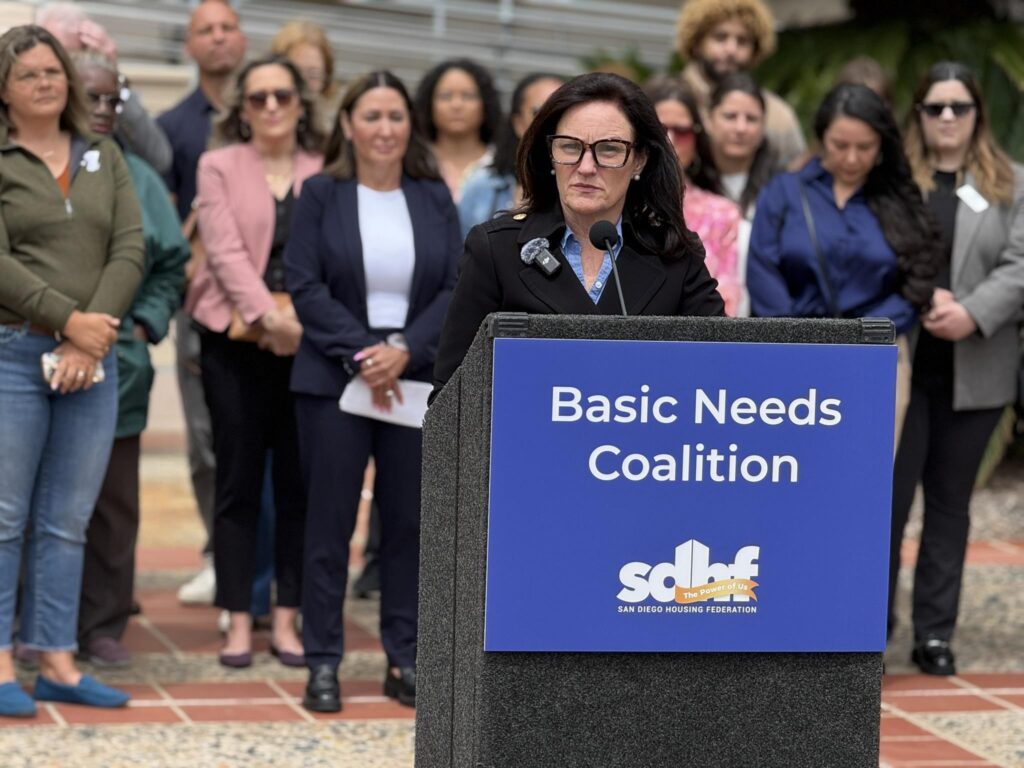
Advocates for affordable housing in the county and state gathered outside the County Administration Center on May 15 in a call for action to address growing concerns about rising rent and stagnant wages, among other issues.
A report from the California Housing Partnership and San Diego Housing Federation also found the county needs 130,000 new affordable homes, despite what was considered a meaningful increase in affordable housing production last year.
The report also found rent has increased about 22% over the past five years, and a worker needs to earn three times the minimum wage to afford to live in San Diego County.
Among the speakers representing the Basic Needs Coalition at the talk was RTFH President and CEO Tamera Kohler, who spoke about mostly positive results from this year’s Point-in-Time count of homeless people in the county.
One exception was the growing number of seniors who were experiencing homelessness for the first time, she said.
“We found for our senior homelessness that one in three of our unsheltered population are over the age of 55, and over 50% are experiencing homelessness for the first time,” she said. “For the first time in their lives, folks who have lived and worked in San Diego are now without a home.”
Kohler said housing and social safety nets are crucial in stabilizing the lives of seniors facing homelessness.
“As San Diegans, we want to care for and respect our seniors, protect their safety and health,” she said. “Nothing is better than having a home. We must do all we can to reduce the number of seniors experiencing homelessness and prevent homelessness whenever possible for this aging and vulnerable population.
“We call on local, state, and federal partners to protect funding for the safety net for seniors, increase prevention funding, and maintain critical access to food, basic assistance, and social services,” Kohler concluded.
Housing advocate Margo Velez also spoke at the event and shared the ordeal she and her daughters faced when they were homeless.
“I’m standing here today because I’ve lived through what so many San Diego families are still living through right now,” she said as she recalled how they were evicted and went into a homeless shelter eight years ago.
“The sanitary and unsafe conditions were deeply traumatizing for my daughter and myself,” she said. “I never had my daughters hold on to me so tightly. It wasn’t possible to continue staying there. We weren’t getting the help that we needed, so we made the decision to live outside.”
Velez said she was battling a brain tumor that affected her eyesight and motor skills while one daughter was dealing with severe effects of MS. Without a mailing address, she said they only qualified for Emergency Medi-Cal, which meant only their symptoms were treated rather than receiving long-term care.
“I cycled in and out of the emergency room for temporary relief, only to be discharged back to a park bench or a hard cement floor,” she said.
“It wasn’t until I connected with Tamera at the Regional Task Force on Homelessness that things began to change,” Velez said. “Next month will mark one year in a stable home.”
Once she had an address, Velez was able to undergo radiation treatment that saved her life and her daughter received specialized care at UC San Diego.
“Housing was my most important medical treatment,” she said. “We cannot keep treating housing and health care as separate issues. For my family, a front door was the only thing that made survival possible. We need that to be true for every family in San Diego.”
The new affordability report found that even working individuals are facing challenges in finding housing.
The average asking monthly rent is $2,606, the report found, and the average monthly income to meet the rent was $8,687. That places rent far out of reach for many San Diegans, including childcare workers who earn an average of $3,377 a month, home health and personal care aides who earn $3,042, janitors who earn $3,381, retail sales people who earn 43,493 and medical assistants who earn $4,202.
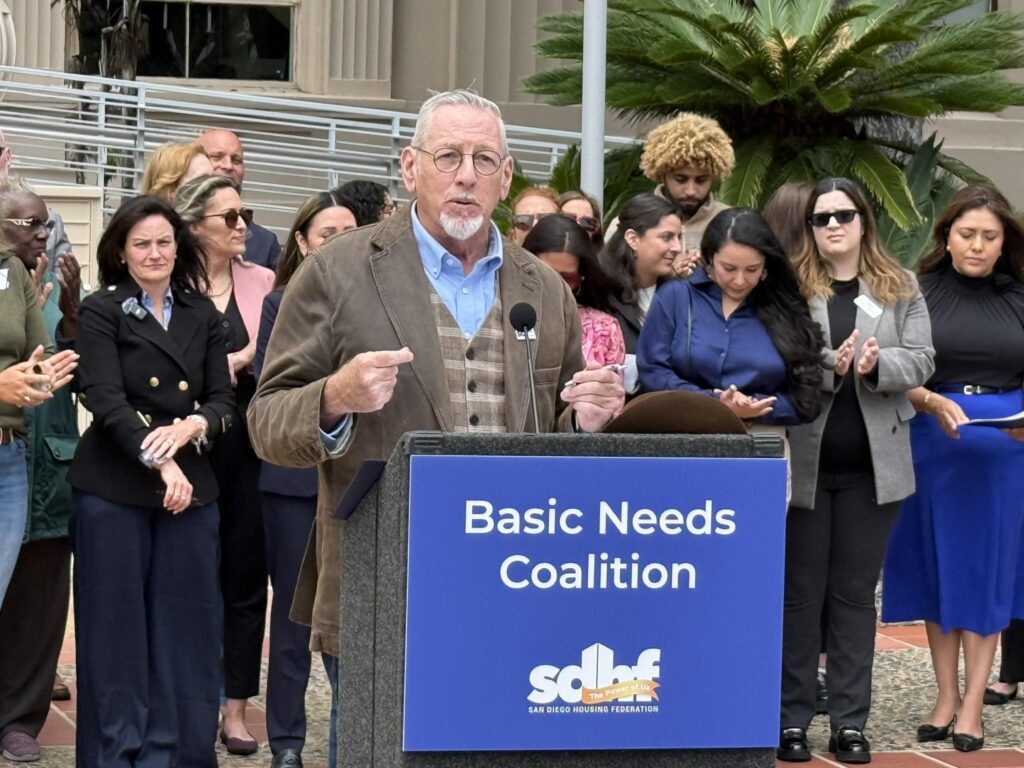
“The Housing Needs Report and the Point-in-Time Count suggest we may be reaching an inflection point,” said Stephen Russell, president and CEO of the San Diego Housing Federation. “The crisis is no longer deepening at the same rate, but it is far from resolved.”
Russell said 211 San Diego will soon release its Housing Insecurity Report, which will corroborate that far too many families and individuals are at the edge of homelessness.
“We cannot back down from our investments in keeping people housed,” he said. “That’s why I call on all of our local state and federal officials, our partners in this work to protect the funding for the social safety net, especially for seniors, to increase prevention funding and to maintain the critical access to food, basic assistance and social services.”
He also called on state legislators to support the 2026 $10 billion Affordable Housing Bond Acts.
Other speakers included Alondra Alvarado, president and CEO of San Diego Hunger Coalition, who said more than 850,000 county residents, one in four of the population, cannot afford three meals a day. Alvarado called on state legislators to strengthen ongoing funding for CalFood and to protect CalFresh Outreach.
