El Cajon housed, sheltered, served many homeless people over past six months
By Gary Warth
Aug. 11, 2026
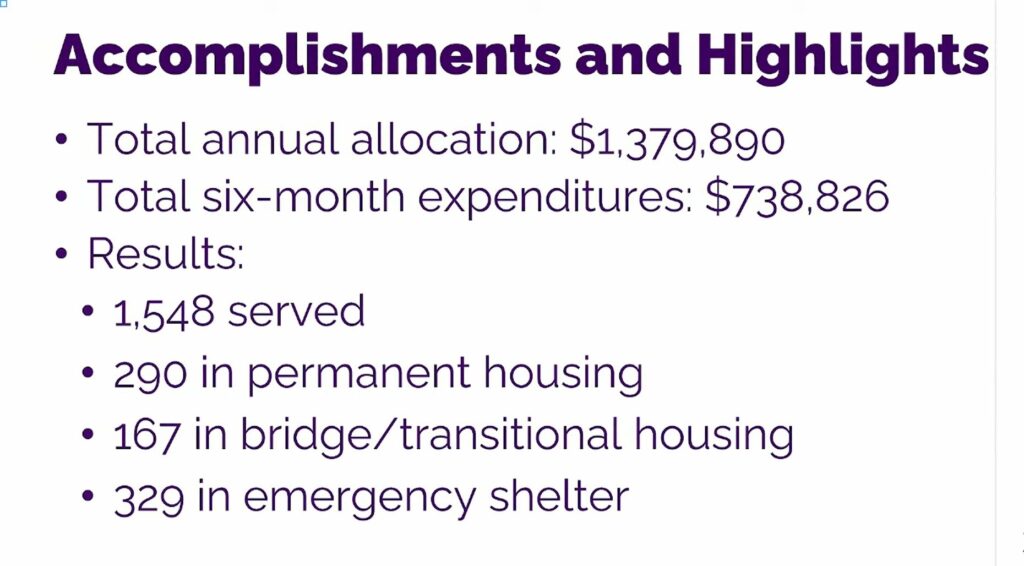
City-funded services in El Cajon found permanent housing for 290 homeless people, provided services for 1,548 people, placed 329 people in emergency shelters and placed 167 people in bridge or transitional housing over the first six months of the year, according to a staff report presented to the City Council on Aug. 11.
The city allocated about $1.4 million for the programs in the 2025/26 fiscal year budget, and $739,000 was spent in the first six months.
Over the past two and a half years, the city has spent $3.3 million on homeless programs that have provided services to 8,623 people, placed 1,119 people into permanent housing, provided 838 people with bridge or transitional housing and provided emergency shelter for 1,960 people.
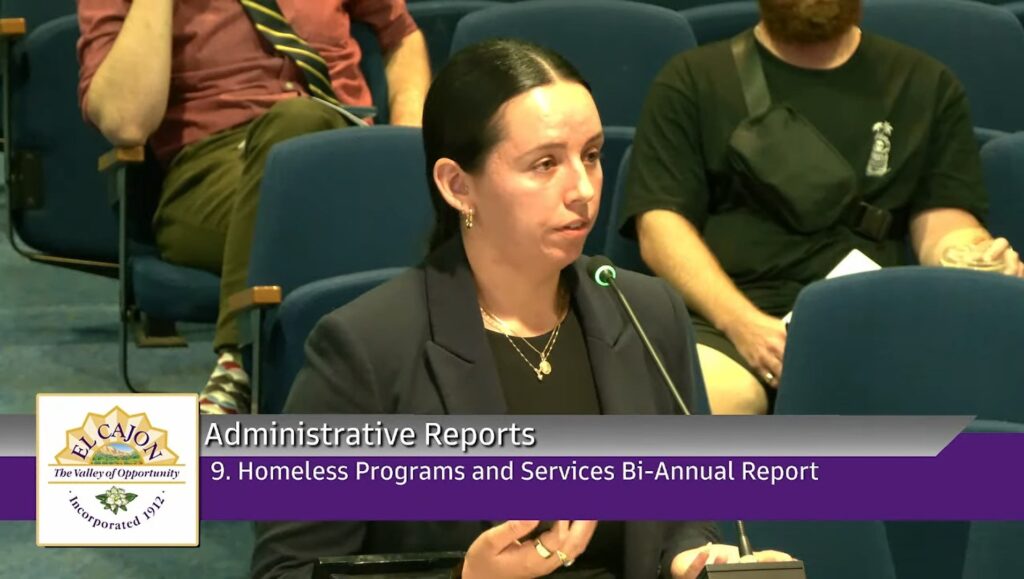
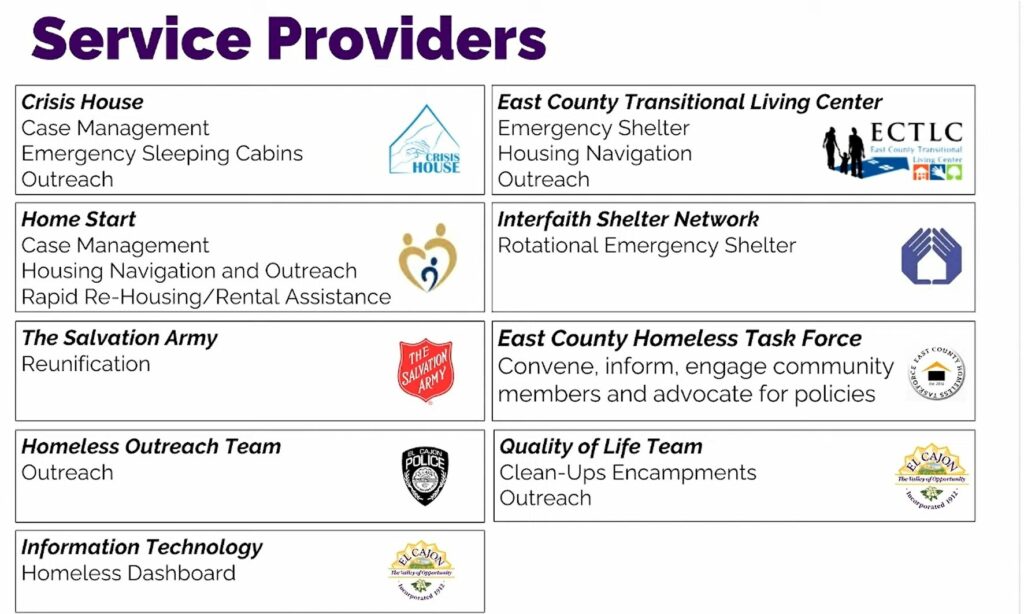
Senior Management Analyst Deyanira Brito told council members about services and funding of 14 active programs in the city over the six months, including seven programs administered through service providers and others through city departments.
Funding came from Community Development Block Grants (CDBG), the Low and
Moderate Income Housing Asset Fund (LMIHAF), Permanent Local Housing Allocation (PLHA) and the city’s general fund. Besides providing services, shelter and housing for homeless people, the city conducted 63 encampment cleanups that removed 264.5 tons of debris from city streets and storm channels. The city also launched its first employee-led point-in-time count of homeless people, which was conducted on Jan. 22.
Crisis House
Crisis House manages the emergency sleeping cabins at Meridian Baptist Church and provides transitional housing for women and children for up to 90 days. Since the cabins opened in December 2022, they have served 42 women and 22 children.
Crisis House received an allocation of $20,721in PLHA funding during the 2025/26 fiscal year to provide residents with rapid re-housing services, assisting individuals and families with security deposits to more easily access permanent housing solutions.
Crisis House received $700,000 in CDBG funds in 2021 to provide outreach until 2031. They will no longer PILHA funds in this fiscal year but they have received a HOME allocation of $300,000 to administer a new program, the Tenant-Based Rental Assistance Program, approved last March.
East County Transitional Living Center
ECTLC provides housing navigation and an emergency shelter program with an initial maximum stay of 90 days for families and individuals, with extensions on a case-by-case basis.
The shelter also provides food, life skills, case management and other wrap-around services, and the program will continue through fiscal year 2026/27.
The outreach program includes street-based outreach and case management, and ECTLC held pop-up events throughout the city to highlight its various programs and resources.
City funding for the program concluded on June 30, but ECTLC will continue conducting outreach activities through alternative sources.
ECTLC also provides three faith-based programs: The Family Restoration One-Year Program, Single Men’s One-Year Program, and Single Women’s One-Year Program. Participants also have access to ECTLC’s six-month job training program.
The Interfaith Shelter Network Program
The Interfaith Shelter Network is a rotational emergency shelter program conducted January through March to provide seasonal, nighttime shelter for homeless families and individuals in East County places of worship.
Family Health Centers of San Diego serves as the intake coordinator for the program, which will continue into fiscal year 2026/27 using CDBG funding.
Home Start, Inc.
Home Start provided El Cajon with homeless outreach, case management services, rapid re-housing rental assistance and emergency housing placements.
Funding for the Home Start programs concluded June 30 and will not be available in fiscal year 2026/27. According to the staff report, Home Start did not apply to PLHA funds in the new fiscal years, so the services will be provided by Crisis House, the San Diego Rescue Mission and Family Health Centers of San Diego, which were selected through the city’s competitive funding process.
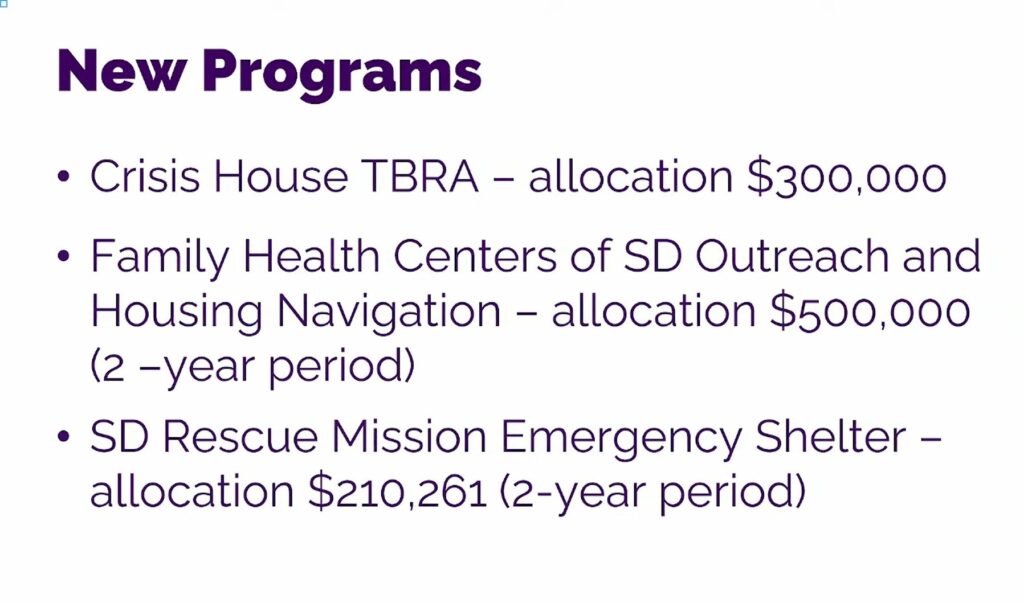
Crisis House was allocated a $300,000 grant from the federal Tenant-Based Rental Assistance program to provide rental assistance in the new fiscal year.
The San Diego Rescue Mission received a two-year $210,261 PLHA allocation to provide homeless people from El Cajon with shelter at SDRM’s South County Lighthouse in National City.
Family Health Centers of San Diego has received a two-year PLHA allocation of $500,000 for housing navigation and street outreach that will begin in the new fiscal year in collaboration with the El Cajon Police Department.
East County Homeless Task Force
In February, the city allocated $5,000 to ECHTF. a community action service and advocacy program with a focus on convening and informing community members about homelessness and housing insecurity.
The group advocates for policies that can result in housing and holds regular meetings with stakeholders. They also connect homeless people with resources through their website, ecassist.org.
El Cajon Police Department
ECPD’s Homeless Outreach Team collaborates for three hours every Friday with homeless service providers to support outreach and engagement with homeless people in an effort to connect them to resources. Up to six officers attend each event and funding comes from the general fund, with costs dependent on the number of outreach events and staffing levels.
ECPD’s Special Enforcement Unit conducts a Homeless Task Force every
week on Tuesdays and Thursdays in partnership with the City of El Cajon Public Works and
Parks and Recreation Departments as part of the Quality of Life Team.
The team focuses on law enforcement, addressing quality-of-life issues and encampment cleanups. It is supported by a contract for cleaning services with Urban Corps, and last fall the team received a new grapple truck to remove bulky items.
Salvation Army
The Salvation Army’s A Way Back Home program reunites homeless people with family members and provides transportation, food and case management for three to six months.
According to the staff report, the Salvation Army encountered challenges in approving eligible clients during fiscal year 2025/26, but are hopeful that with their current outreach marketing efforts in the city, they will use their fiscal year 2026/27 allocation to reunite more individuals with their families.
Information Technology Department
The city’s IT Department created the Addressing Homelessness Dashboard in collaboration with other departments and presented it to the City Council last September.
The dashboard was developed to answer key questions from the community on steps taken to address homelessness, resources use, and any progress made. The IT Department has updated the dashboard to provide current data on homelessness incidents, encampment cleanup locations, resources, program information, expenditures and point-in-time count results.
