Father Joe’s manager paved way for pets in homeless shelters
Policy change credited with helping many off the street
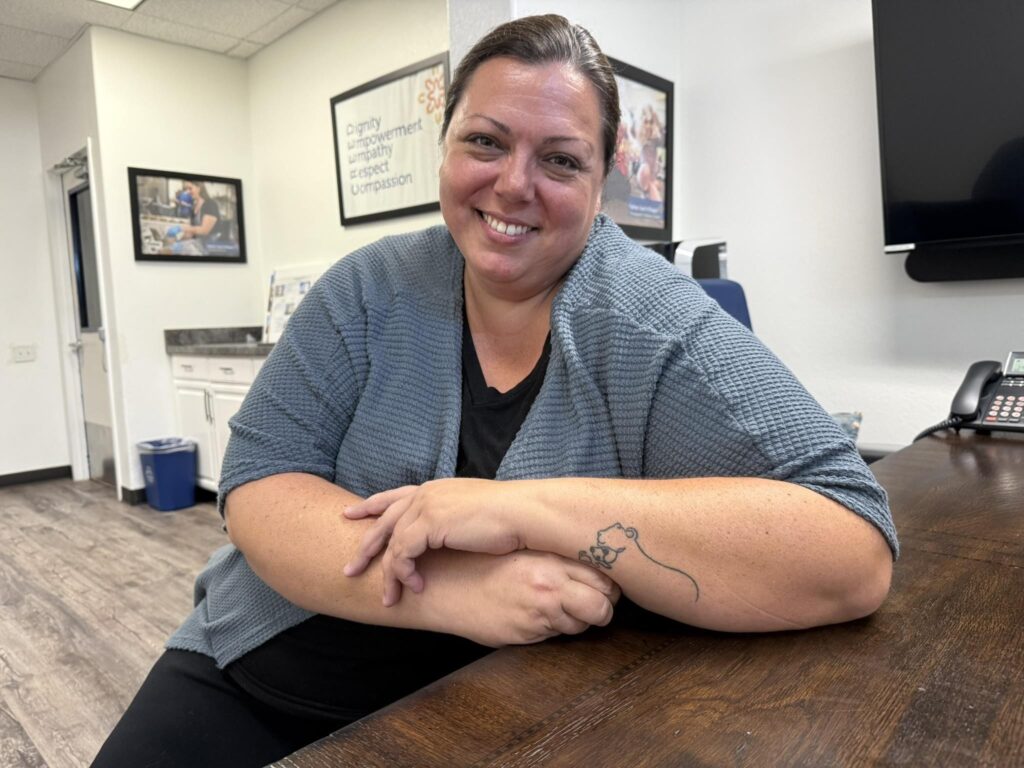
By Gary Warth
July 31, 2026
For Jesse Casement, the problem and the solution were both obvious.
Hundreds of homeless people were on the street in San Diego, yet there were shelter beds available.
Many homeless people wanted to go into shelters, but they were turned away because they had pets.
As a manager in charge of shelters at Father Joe’s Villages, Casement had already led the effort to accept service animals in 2010, and in 2020 she pushed to evaluate the nonprofit’s policy on barring pets.
“That eventually evolved into one of the reasons we opened up to pets, because I just didn’t want that to be a barrier to entry,” she said.
There’s no doubt the change has resulted in more homeless people coming in off the street and finding shelter at Father Joe’s, but her impact has been even greater.
All shelters funded by the City of San Diego now accept pets, and Father Joe’s has hosted events to educate service providers from other cities and out of state on how they can accommodate their clients’ pets in shelters, resulting in even more people off the street.
“It’s a lovely legacy,” Casement said. “I’m happy to have it.”
In 2023, Casement was recognized as Program Staff Member of the year in the annual RTFH conference and was singled out for her groundbreaking work at Father Joe’s.
“There’s a multitude of people in shelters now because of what Jesse did,” said Father Joe’s Employment and Housing Program Manager Paul DeLessio as he introduced her.
“We now have two dog parks in our shelter because of Jesse,” he added. “She raised the money to help this happen.”
Casement, the chief client services officer at Father Joe’s since 2024, was hired in March 2010 as manager of the family shelter three months after moving to San Diego from Kansas with her cat and two Boston terriers.
It was not the career she had originally planned – Casement had been studying to be an elementary school teacher before the move – but she now sees the pivot as a calling.
“This is where I belong,” she said, recalling the day she walked to her interview at Father Joe’s and passed homeless people living on sidewalks, a sight she had not seen back in her hometown.
“The humanness,” she said. “I felt so safe. That’s the best word I can use for it. I feel very connected to humans when I’m here. I knew that I was surrounded by people who were looking out for each other, and I felt like I was part of that.”
While her job was new, the career change wasn’t quite as extreme as it seems. Casement already had experience working with youth and underserved populations as well as with animals.
“I loved working with animals,” she said about her past jobs as an adoptions counselor at the Kansas Humane Society and as a veterinary assistant.
She also had a passion for helping youths and worked with runaways and teens in the foster care system at the Wichita Children’s Home, and she worked with juveniles at the Sedgwick County Department of Connections.
“That was my transition from animals to people,” Casement said. “I’m very interested in helping kids. I think it really evolved when I started working in juvenile detention. It really evolved into having a deep interest in strengthening families.”
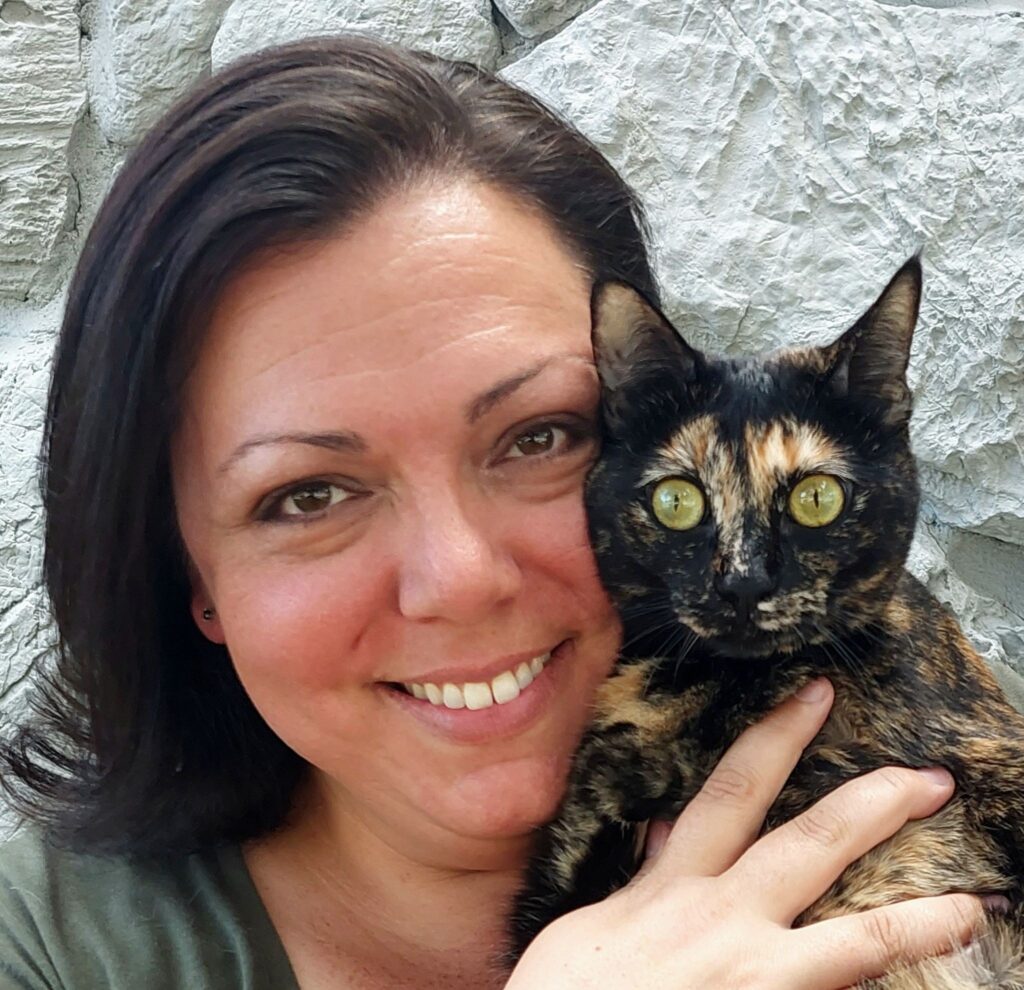
Casement quickly fit into her new role, although she admittedly lacked experience in the field.
“I think about this a lot,” she said. “I was from Wichita, one of the bigger cities in Kansas, but you just really didn’t see homelessness. And then I moved out here, and it was just so prevalent. I’d never seen someone standing on a corner asking for money. I’d never seen a tent on a sidewalk. That was something I’d never experienced.”
Casement managed shelters at the Joan Kroc Center and the Bishop Maher Center and also worked with programs for single men, single women and veterans.
“It was just a crash course in learning about homelessness and in learning about all of the things that people face in San Diego and about San Diego resources,” she said.
Casement also got a deeper insight into the population she was serving.
“I really started understanding what could lead to someone being homeless, or why someone would choose not to take a bed if a bed was available,” she said.
Casement said she learned people in the shelter may have experienced trauma or other issues that others may not understand.
“It’s real easy to have what I would call a middle-class lens of view,” she said. “It’s easy to have that mentality, and absolutely it challenged my perceptions by working here and just seeing all of the things that people go through and how trauma can really impact them.
“I think where it strikes me the most is their confidence in themselves,” she said. “We have so many people who come through these doors that just do not believe in themselves and have lost hope for whatever reason. And that’s where my team and I feel really challenged all the time, to let people know how we care about them and we want them to succeed. We’re going to have their back.”
Casement said people may decline to go into shelters because of what she calls the three Ps: People, property and pets.
Sometimes people will decline a shelter because they are not allowed to come in with a person close to them or their partner or spouse because shelters separate sexes.
Other times a shelter will not have enough space to accommodate someone’s property, so that person will not want to come in.
And then there are restrictions on pets, which particularly resonated with Casement.
“My pets were my safety and support for everything that I was going through as a kid,” she said about her dogs Shiva and Carrie. “I knew how much they meant to me, so I couldn’t imagine telling someone outside ‘You have to get rid of your animal to come in.’”
Father Joe’s began accepting service animals into its shelters in late 2010 to comply with an update to the Americans With Disabilities Act that year.
“I was like, ‘Let’s do it!’” said Casement, who was instrumental in the transition as a shelter manager. “I was so excited to start serving animals.”
Ten years later, Casement questioned why there were still restrictions on other pets, which she saw as a barrier to keep people from accepting shelter.
That idea was sparked in 2019, when she was invited to speak at a Zoom meeting with the Co-Shelter Collaborative, a national group of homeless service providers and government groups that promote allowing pets in shelters.
“I went to this meeting and I presented on how we serve emotional support animals and service animals,” Casement said. “And I stayed for the rest of the meeting and listened to how other entities are doing this. It really lit my fire of wanting to expand it to pets.”
Casement brought the idea to her boss at Father Joe’s.
“To me, it just made sense,” she said. “We were already serving dogs, cats. We even had an emotional-support rooster. We had guinea pigs, and we were able to serve them all. So let’s try pets.
“I suggested it because I don’t want people to turn down the shelter bed and all of the wraparound services that we can provide here to help them in their homelessness,” she said. “I don’t want them to lose out on that because they can’t bring their animal inside.”
Father Joe’s Director of Government Grants Thomas Lovell helped secure a grant from the state Pet Assistance and Support program, which provides funds to help homeless shelters create accommodations for clients with pets.
At Father Joe’s, the money was used to create pet-relief areas, dog-bathing areas, increased custodial demands, training for staff members and other expenses.
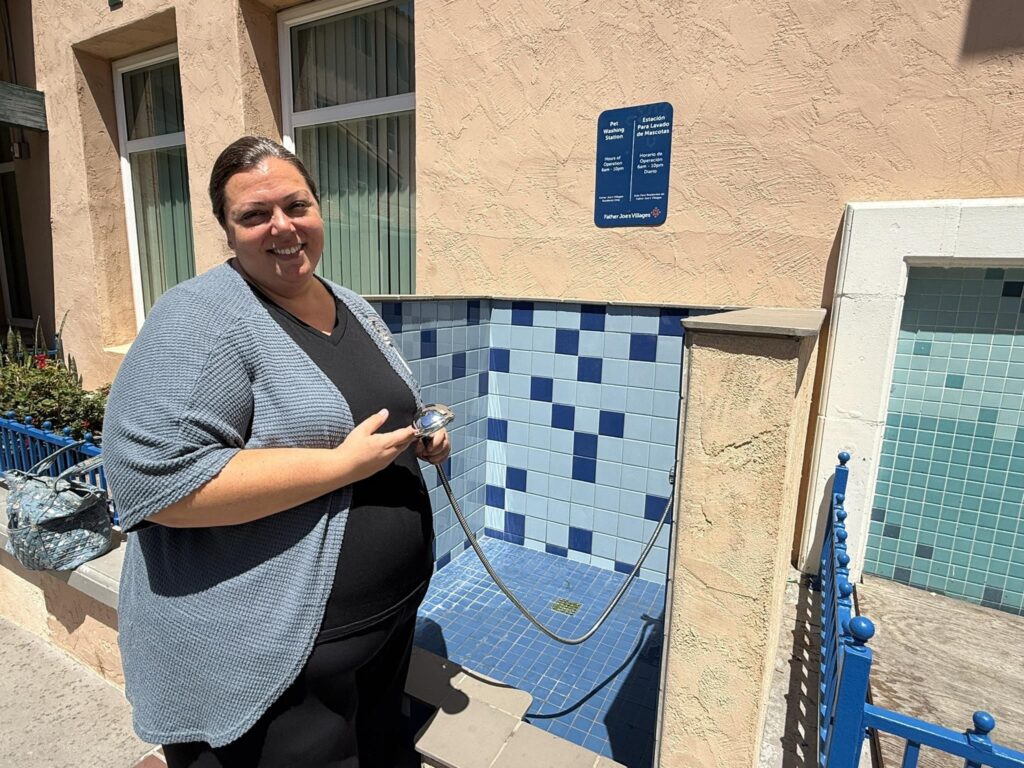
While the changes on campus have created a comfortable environment for pets, Casement stresses that the effort was aimed at helping people.
“I never want to give the misconception that Father Joe’s Villages is shifting into becoming an animal shelter,” she said. “That’s not it. It’s just in society, how many of your neighbors have pets? And just because you’re unhoused doesn’t mean you don’t have pets.
“And so I don’t want people to miss out on our case management services and our chaplaincy services if they need that kind of support,” she said. “I don’t want them to miss out on our health services and behavioral health counseling and all of that just because they can’t bring their dog in with them.”
The change does not mean the campus is overrun with animals. On any night, Casement said the 800-bed facility has about 30 animals. The 134-cot inclement weather shelter that opens when needed from November through March also allows pets.
Casement said the San Diego Housing Commission reached out to Father Joe’s following the change to ask for documents related to accommodating pets, which led to all city-funded shelters becoming pet-inclusive.
In October 2024, Casement helped spread the concept nationally when she spoke at an open house at Father Joe’s with Christine Kim, founder and executive director of My Dog is My Home, sponsor of the Co-Shelter Collaborative.
The open house, the first of its kind held at Father Joe’s, was attended by staff members from Pine Street Inn in Boston, the largest service provider in Massachusetts, and Shepherd’s House in Mount Airy, North Carolina.
Casement said she recently spoke to Kim, who told her that more and more shelters throughout the country are adopting a pet-inclusive policy as a way to help homeless people off the street and connected to services.
