For homeless veterans denied benefits, new program opens a path to housing and care
March 3, 2026
By Gary Warth
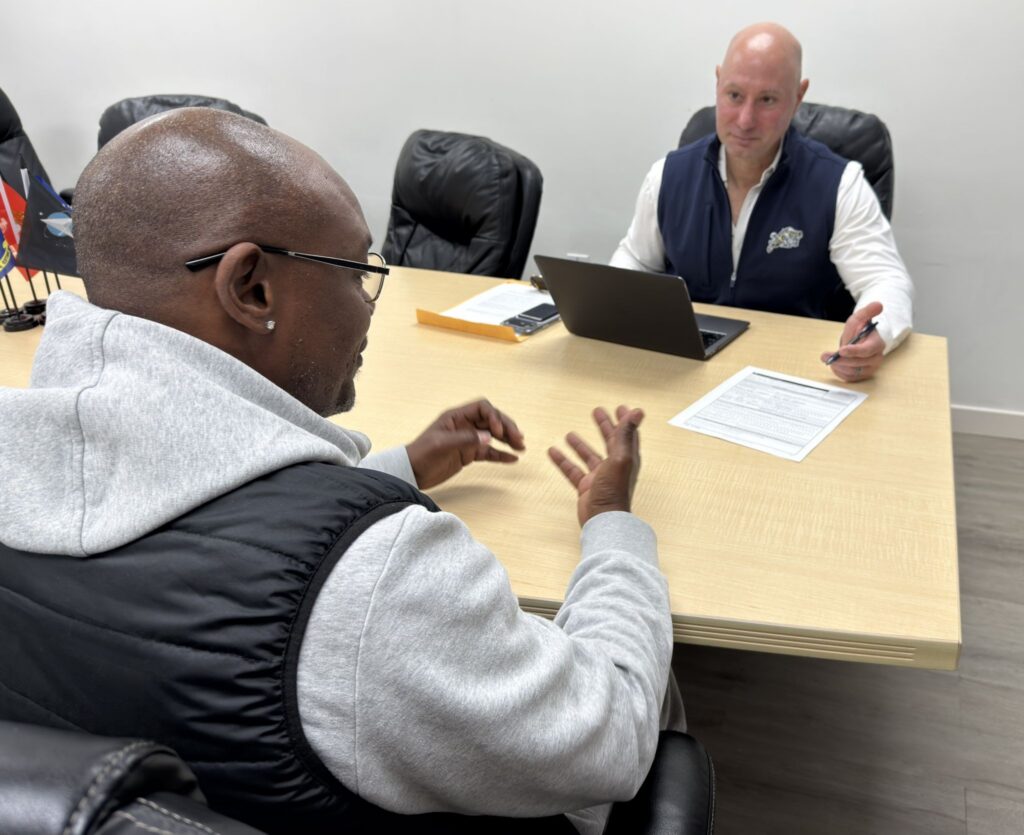
While homelessness among veterans has declined in recent years, many remain without housing or services — often because they were denied benefits that could have helped.
“It’s just a nightmare to navigate the system,” said attorney Chris Czaplak, whose private practice, Homefront Group, specializes in helping veterans secure disability benefits.
Beyond the complexity of the application process, many veterans are denied benefits due to less-than-honorable discharges. Those decisions can be appealed, but the process is difficult — especially for individuals experiencing homelessness, mental illness or disability.
In San Diego County, thousands of veterans interact with the homelessness system each year, many facing barriers to federal benefits tied to discharge status, mental health conditions or the complexity of the VA process.
A new pilot program funded by the Regional Task Force on Homelessness (RTFH) and the Lucky Duck Foundation aims to close that gap.
Czaplak was hired in February to run the free legal aid program and now meets weekly with clients at Veterans Village of San Diego (VVSD), helping them access benefits tied to housing, healthcare, education and job training.
RTFH and the Lucky Duck Foundation each contributed $25,000 to launch the pilot, which aims to serve 20 veterans.
A Navy veteran and former JAG officer, Czaplak focuses his private practice on VA disability claims.
While legal assistance for veterans is not new, the field has been plagued by predatory firms.
“They’re claim sharks,” Czaplak said. “They charge an extraordinary amount of money… and the potential for fraud is extreme.”
In California, the practice is now illegal. Gov. Gavin Newsom signed Senate Bill 694 into law in February, prohibiting unaccredited companies from charging veterans for assistance with VA claims.
While veterans cannot be charged directly, third-party funding — like this pilot — remains legal.
Czaplak said many of his VVSD clients have less-than-honorable discharges stemming from relatively minor misconduct, often already addressed through military discipline.
“They’re being denied benefits based on being late to work a couple times and maybe mouthing off to their CO,” he said. “…Did that mean they should be consigned to homelessness? That’s disproportionate punishment.”
Even veterans with honorable discharges often struggle to access benefits.
“I have not yet seen a client at Veterans Village who is not in need of [employment or education support],” Czaplak said.
By mid-March, the program had already produced its first breakthrough.
Damien Carlisle, 51, received a less-than-honorable discharge from the Navy in 1995 after a serious on-duty car accident that later resulted in a traumatic brain injury.
“I’ve lost jobs because of physical inability or my inability to keep appointments,” he said. “I haven’t had a complete eight-hour sleep in decades.”
Previously homeless, Carlisle had long assumed he was ineligible for benefits.
“When I was discharged, I just thought I had to live with the results,” he said. “I didn’t even know about the VA.”
After years of failed attempts to navigate the system, he described the process as “draining” and “demoralizing.”
Three days after meeting with Czaplak in early March, Carlisle received a letter from the VA: his discharge would now be treated as honorable for VA purposes, and his benefits were under review.
After 30 years, the door had finally opened.
“It’s really been a rough road,” Carlisle said. “I served my country… and it’s been a damn paradox.”
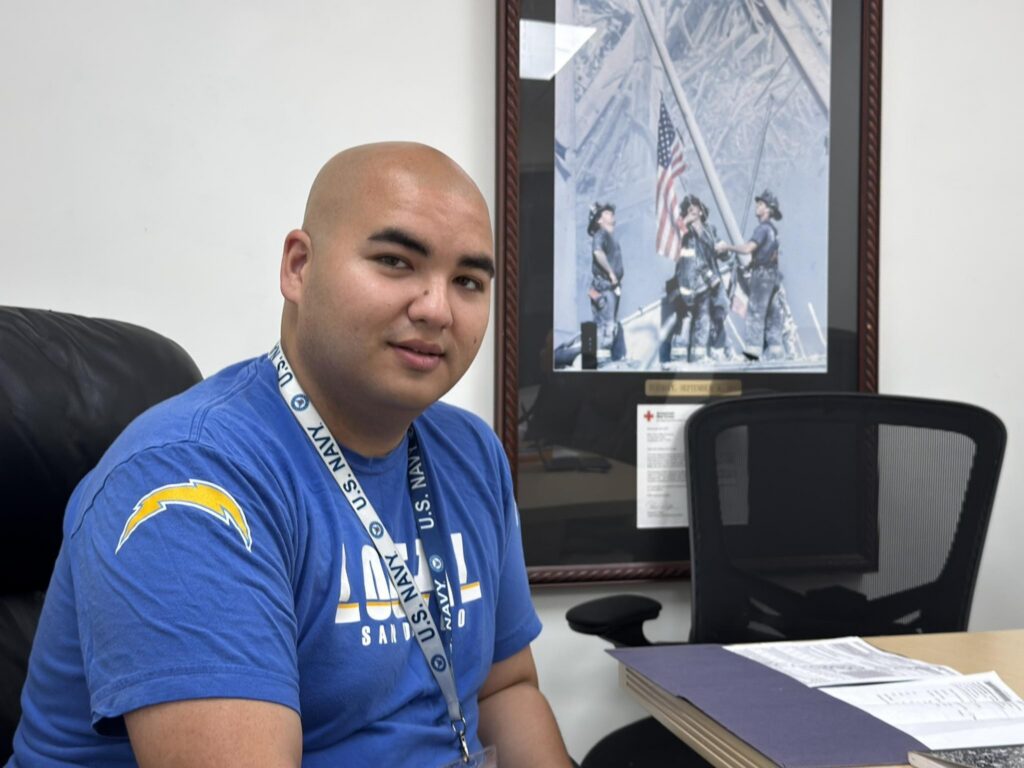
During the same session, Czaplak also met with Isaiah Noon, a Navy veteran who has been out of service for two years and was in his third week at VVSD.
Noon had experienced homelessness after leaving the military and said the birth of his daughter pushed him to seek stability.
“I knew staying homeless just was not an option,” he said.
Despite holding jobs after his service, untreated mental health challenges made it difficult to maintain employment.
“I started realizing… I can’t hide the problem that I have,” he said. “So now I can’t work.”
Though eligible for some compensation, it wasn’t enough to live on. After two years of trying to navigate the system alone, Noon said he hopes the program can help him access the support he needs.
“It’s more challenging than it looks,” he said. “It feels like the system is my enemy.”
