Panel discusses what’s working, where are gaps in homeless response
By Gary Warth
July 17, 2026
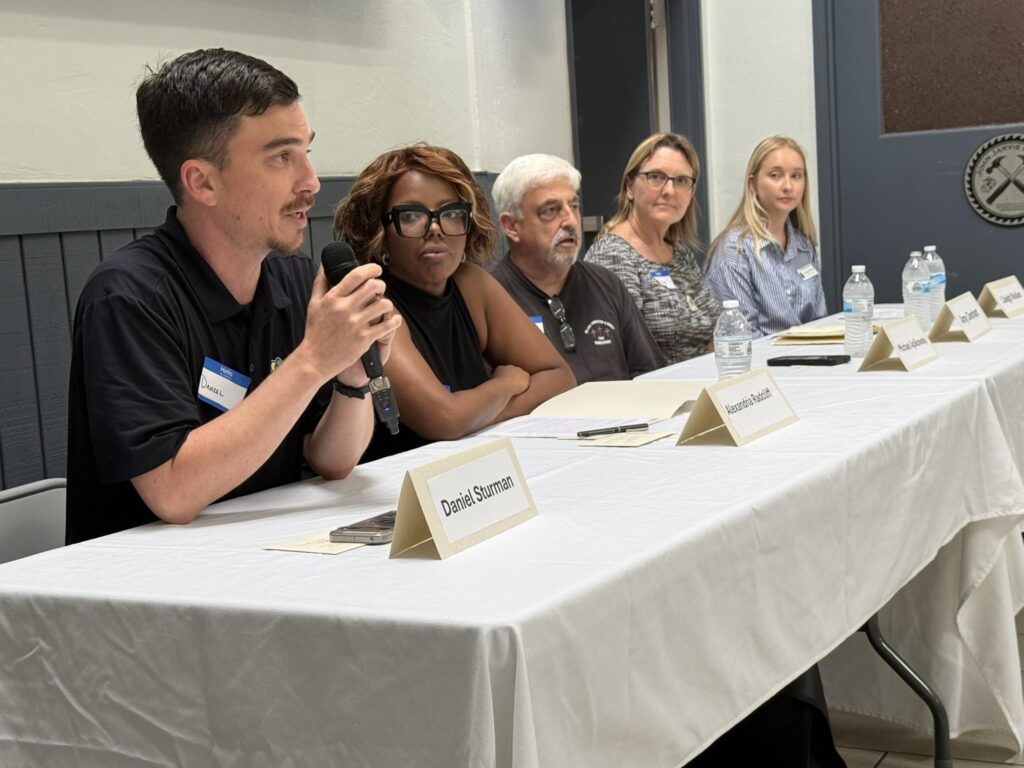
Experts in homeless prevention, including an RTFH staff member and a person with lived experience, shared their insights about the area’s homeless response system during a panel discussion July 17 at the service provider Brother Benno’s in Oceanside.
During the 90-minute talk, speakers answered questions presented by moderator, beginning with RTFH Housing and Unsheltered Strategies Manager Daniel Sturman, who was asked the meaning of homeless prevention in practical terms.
“In terms of the operational side, homelessness prevention starts at the door, at the intake,” he said, explaining that an intake person must assess a client’s needs, which often are more than just money.
Once the person’s needs are assessed, a case manager then will work with the client to find services such as a food provider that can stabilize a person’s expenses or offer other assistance that will help the person stay housed,” he said.
Alexandria Radcliff, a Brother Benno’s client with lived experience in homelessness, was asked about common situations that can place people at risk of homelessness.
“Anybody who you work alongside could be one paycheck short of becoming homeless,” she said, giving herself as an example of someone who struggled to make ends meet when she was employed but not making a living wage.
“Missing a paycheck or a sudden costly car repair could lead to someone spiraling into homelessness,” Radcliff said.
Asked about gaps in the system, Michael Aplikowsky of Convicted 4 Christ spoke about “relational poverty.”
“There’s something definitely missing in their lives, and that’s relationships,” he said. “People who find themselves homeless suffer from that tremendously. So I think that’s something we need to address.”
Aplikowsky also said housing often is just a first step in helping people overcome homelessness.
“We need to address that once we house people, we’re not done,” he said. “We have to figure out ways to help them sustain housing. Many of the people that are homeless had jobs, had housing, had cars, had dreams. What happened?”
Sturman added that another gap in service is the low pay homeless service staff members often receive.
“This field is made up of people with passion, and people with passion also have bills to pay,” he said.
Amy Denhart of Founders Together to End Homelessness was asked why donors and community supporters should invest in homeless prevention.
Denhart said homeless prevention is much more cost-efficient than providing shelter and services to someone already homeless. She also noted that homelessness among seniors was growing faster than other populations, and she said shallow subsidy programs that pay for a portion of a senior’s rent can help keep them housed.
“It is significantly cheaper, not to mention the most humane thing obviously,” she said about the program that provides $300 to $500 a month to keep a senior housed and out of the shelter system, which is more expensive in the long run.
Denhart said her organization also supports diversion programs that provide one-time payments to cover the cost of a person’s unexpected expenses, which could keep a person from falling into homelessness.
“Those are some of the examples that when we at Funders Together do with our dollars because it is just so much more cost-effective,” she said.
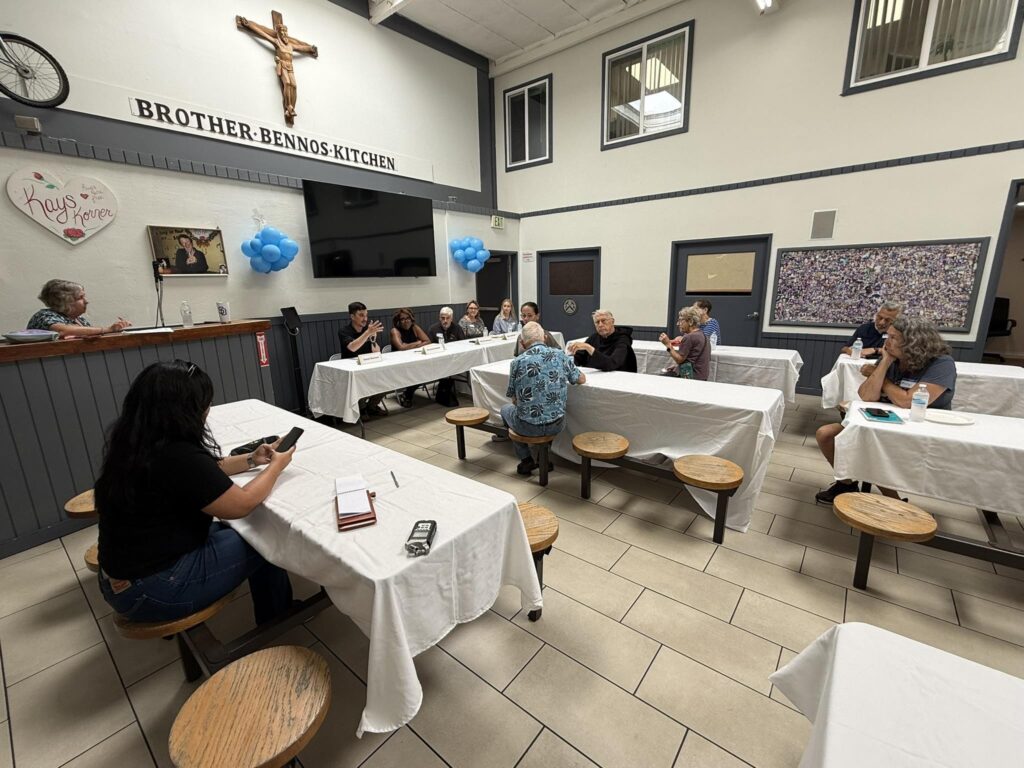
Addressing a question about the people who are coming to Brother Benno’s for help, Director of Self Sufficiency Lileigh Waller said the service provider sees people who have little income, seniors on a fixed income and people who have had an unforeseen expense such as a car repair or medical bill.
“And then for the domestic violence survivors, they’re having to choose between staying with somebody who’s hurting them or going and living on the streets,” she said. “So we’re seeing that a lot as well.”
Waller shared an example of a woman who came to Brother Benno’s because her chemotherapy bills had depleted her savings and left her at risk of losing her home.
“We were able to help her with rental assistance and she was able to go and find a job,” she said.
Addressing positive programs they have seen, Sturman and Denhart said shared housing has been one of the most beneficial and cost-effective ways to help people avoid homelessness.
Denhart said the homeless response system was not connecting people with shared housing, so Funders Together to End Homelessness backed a pilot program run by Townspeople and involved bringing trainers to San Diego.
“So now, frontline employees who are working with a client, instead of just trying to find them a one bedroom or a studio, there’s a roommate-matching app they can use,” she said.
“It’s become much more prevalent in our county and a lot more providers are using it,” she said, adding that the city of Vista is one of the areas where it is in use.
Sturman said the concept is especially beneficial to seniors because it also provides greater socialization opportunities for people who otherwise would be living alone.
“There’s plenty of other things we can do to house seniors and rehouse them in more affordable places, but the crisis is here,” he said, stressing that the rising number of seniors facing homelessness is a pressing concern. “It’s not looming over the edge. The crisis is here.”
