Researchers examine causes of solutions to aging homeless population
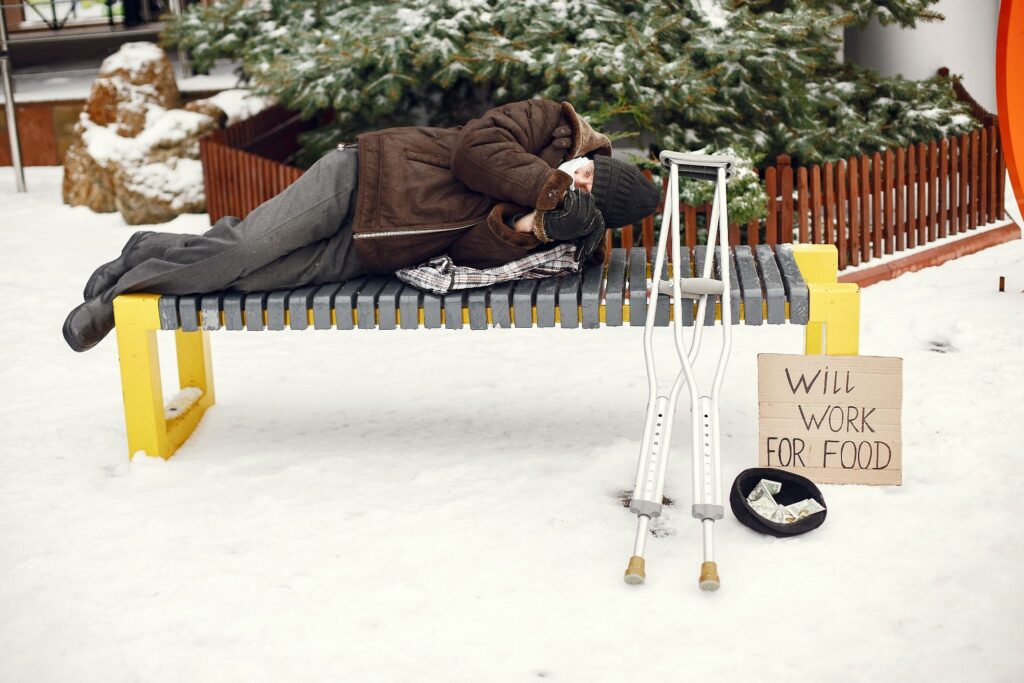
The number of homeless seniors is on the rise as many face rising rents, medical issues and other challenges on a fixed income.
By Gary Warth
June 11, 2026
From mortality rates among homeless seniors to how older unhoused people are depicted in movies, researchers over the past few years have examined the many conditions and challenges faced by an at-risk aging population.
With more seniors falling into homelessness for the first time nationwide, The Gerontologist Journal, a peer-reviewed academic journal published on behalf of the Gerontological Society of America, devoted its July 2025 edition specifically to homelessness among older adults with a compilation of 19 academic studies on the subject.
The 2026 count of homeless people in San Diego County found the number of seniors experiencing homelessness had increased 5% in one year, and the nationwide count has found more than 100,000 homeless people are 55 and older.
With the numbers continuing to grow, it’s worth taking a look at the journal’s special edition on senior homelessness, which began with an introduction that called for more research to help guide policy solutions and identify evidence-based clinical interventions.
Six studies in the journal describe health disparities experienced by senior homeless people.
In their paper “Identifying and Addressing Housing Insecurity in Older Patients,” researchers Erin Ferguson and Shivani Mehta used data from a large California medical system and found that 0.6% of patients 55 and older identified as being housing insecure, but only 7% were referred to social services.
Their paper cited another study that found the number of older Californians increased only 7% from 2017 to 2021, but the number of people in that age group accessing homelessness services increased 84%.
“Little research has assessed how well the healthcare sector is meeting this challenge,” they wrote. “Given housing insecurity’s impact on health, a growing chorus of community organizations, clinicians, and policymakers have suggested transforming healthcare settings into places where patients’ housing needs are universally detected and addressed via links to social services.”
The researchers wrote that California policymakers have required emergency departments to offer referrals to shelters or residential treatment programs if patients would otherwise be discharged to the street, but many do not have a clear way of using electronic health records to detect who is housing insecure.
The paper “Early Mortality and Medical Complexity Among Medicolegal Cardiovascular Disease Deaths” by Ben King, Shriya Swamy and Shaya Khorsandi found homeless people died from cardiovascular deaths at a much younger age than housed people.
“This underscores the call for social services and healthcare systems to be more responsive to the challenges faced by persons experiencing homelessness, with more integrated and targeted health and aging care interventions to address the specific needs of these marginalized individuals,” they wrote.
“Characteristics and Healthcare Utilization Among Aging Veterans in Supported Housing,” a paper by Hind A. Beydoun and colleagues, analyzed the healthcare of 1.4 million veterans, including 66,000 who are on Veterans Affairs Supportive Housing vouchers.
The researchers found older veterans on vouchers were more likely to have physical and mental health morbidities, including substance use disorder, than veterans who were independently housed.
VASH veterans were found to have greater healthcare needs and more likely to use emergency and inpatient care services rather than outpatient medical services. The researchers also found there is a need for targeted interventions that better engage and reduce barriers to care among aging populations in supported housing.
“Developing an Intervention to Enhance Aging in Place for Older Veterans Living in Permanent Supportive Housing,” a paper by Kelly Su and colleagues, also examined the VASH program by interviewing older veterans on vouchers and creating focus groups of staff members to identify unmet need to help clients live independently.
Researchers identified four main themes: a need for services to support aging in place, expanding the VASH workforce, a focus on home delivery and the importance of trust.
The top-prioritized interventions included staffing of social workers and healthcare workers and a focus on geriatric needs, mental health needs, dementia care and medication management.
Other top-ranked interventions were where, how and when those needs would be addressed.
Using data from the Health and Retirement Study, Douglas Hanes’ and Sean Clouston’s paper “The Intersecting Effects of Lifetime Experiences of Homelessness and Incarceration on Cognitive Aging and Dementia Risk Factors in the United States” found that lifetime experiences of homelessness and incarceration are associated with an increased risk of poor cognitive functioning in later life.
Diagnosis of mild cognitive impairment and Alzheimer’s disease and related dementias were more common among older people with a history of incarceration or homelessness, the researchers found. The paper also noted people who experienced homelessness or incarceration were more likely to have depression, mental illness and have faced discrimination from healthcare providers and police.
In “Supporting Older People Experiencing Homelessness and Memory Problems in Hostels,” researchers Penny Rapaport and colleagues examined how staff workers at hostels dealt with senior homeless people with some mental issues.
Through interviews and observations, the researchers found staff members used a variety of techniques when working with older people who had memory problems and had experienced homelessness.
The staff emphasized the importance of personalized routines in dealing with the seniors, and they worked to balance independence and safety for their clients.
Four other articles in the special issue described using novel methods to better understand the role of social integration, connection and support for homeless seniors.
In “Aging in a Transient Place: Reflections on Place Meaning, Third Places, and Social Connection Among Displaced and Older Adults Experiencing Homelessness,” researcher Shellae Versey asked former and current homeless people in a mid-sized Connecticut town to photograph their everyday lives over two weeks.
Their findings suggested that “third places,” or places outside of home or workplace, were even more meaningful than housing stability because they create a sense of belonging, community and support. Third places were seen as a possible untapped resource for strengthening social connectedness.
Lara Nixon and colleagues’ paper “Increasing Social Connection in Permanent Supportive Housing: A Participatory Study on Therapeutic Recreation for People With Experiences of Homelessness” reported on how older clients in permanent supportive housing learned new skills and built a sense of connection through collaborative recreation programming.
Participation in recreational activities increased to 90% through rapport-building and encouragement from the recreation team, and residents reported increased confidence to learn new skills, engaging in meaningful activities, and improved social connection with their community.
In “Mechanisms to Promote Social Integration in a Temporary Housing Program for Older Persons Experiencing and At-Risk of Homelessness” by Rachel Weldrick and colleagues, researchers identified how social connection, support and participation are facilitated among seniors living in a temporary housing program.
Researchers found those goals could be reached through access to technology and frequent communication with program staff, which enhances feelings of social support and reduces isolation. They also found accessible environments promote social connection and participation.
In a related study, “An Intersectional Perspective on Digital Health: Longitudinal Narratives and Observations With Older and Middle-Aged Women Experiencing Homelessness” by Sophie Nadia Gaber and colleagues explored the value and role of technology in supporting older unhoused women.
The researchers found that while eHealth may exacerbate fear and mistrust of healthcare, technology can also provide less stigmatizing and more flexible support and contribute to one’s sense of home, ability to navigate social supports, and ability to remain socially connected.
Five articles in the journal examined structural factors that challenge the housing security of older adults.
In “Challenges to Aging in the Right Place for Older Adults Experiencing Homelessness,” Anthony Traver and colleagues examined the effects of frequent relocations and unstable housing due to low incomes, rising rental prices, loss of relationships and overburdened housing services.
The researchers found that affordable housing, rent subsidies and case management could lead to stable housing, but those resources were scarce.
“The limited interest in service-rich environments may reflect the fact that most older adults in this study were not incapable, they were just poor,” the researchers wrote. “In the absence of housing and welfare reform, the pursuit of the right place to age will increasingly involve the choice between shelters, sidewalks, and forested lands. “
In “Promoting Housing Stability Through Eviction Prevention for Older Adults in Social Housing,” Christine Sheppard found that eviction threats to older tenants in social housing include physical and mental health challenges, confusing paperwork, and financial difficulties.
The paper recommends improving eviction prevention by addressing root causes, adopting senior-friendly communication practices, and enhancing community support.
“The Gentrification Acceleration Press Schema: A Critical Examination of Gentrification-Induced Displacement in Later Life” by Samuel Van Vleet and Kate de Medeiros presented a model to help researchers understand the impact of gentrification on old adults’ ability to remain in their homes.
The study also examined how historical disinvestment in communities contributed to the displacement of older populations.
Related, Amy Van Berkum and colleagues’ “A Systems Approach to Homelessness Prevention for Older Adults” examined a guide for intervention research to provide the evidence needed for policy change.
The paper focused on homelessness research in Canada and how evidence-based policy changes could be made by using a five-level approach that included universal prevention through a financial or other type of benefit, upstream prevention, crisis prevention, emergency prevention and repeat prevention.
Jared Schachner and colleagues’ “Assessing Racial Heterogeneity in Housing First Supports’ Effectiveness Among Older Adults Experiencing Homelessness: Evidence From Los Angeles County,” researchers examined how older adults of color benefitted from permanent supportive housing and rapid rehousing.
The report found both programs considerably reduced the risk of returning to homelessness across age-race subgroups and may be particularly effective for Black adults aged 55–64.
The final four articles in the issue focused on trauma among seniors experiencing homelessness.
Rebecca Goldszmidt and colleagues’ “Experiences of Trauma for Older Adults With Lived and Living Experiences of Homelessness in Middle to High Income Countries: A Systematic Review and Meta-Aggregation” chronicled their research of 24 studies about the intersection of senior homelessness and trauma.
Using meta aggregation, they identified five trauma-related issues. Those included a feeling of being let down by society and systems, a sense that the world is not a safe place and identifying themselves as survivors rather than victims because of their resilience.
Researchers also found the seniors are living in the long aftermath of trauma and that homelessness itself is a deeply personal trauma.
The various forms of grief that formerly homeless people experienced after moving into housing were examined in “I Haven’t Grieved Yet…”: The Experiences of Older Homeless Persons Living in Long-Term Transitional Housing,” by researchers Emilie Cormier and colleagues.
Formerly homeless people interviewed for the paper described the unsettling feelings they experienced after moving into long-term transitional housing. One man said he felt a loss of connections with the community after he stopped panhandling.
“Adopting a humanistic–existential grief perspective could go a long way in supporting the development of housing policies, programs, and practices that nurture the time and space required for older homeless persons to escape precarity in the final stages of life, by reconnecting with themselves and the social world,” the researchers concluded.
“Screening Aging and Homelessness” by researchers Rose Capp and Jim VandenBosch examined fiction and nonfiction films related to senior homelessness and how solutions to homelessness are being tested and developed.
The fiction films were “Time Out of Mind, ”Nomadland,” “Lady in the Van” and “Some Happy Day,” and the paper said all four provided “thoughtful and considered insights into the complex nexus of issues that can contribute to older adult homelessness.”
Documentaries included “Lead Me Home,” “No Place to Grow Old” and “Under Cover.”
The paper also reviewed three films by Invisible People, “Finland Solved Homelessness: Here’s How,” “Can This End Homelessness? Hennepin County Shows How,” and “Illegal to Sleep: Grants Pass’ Cruel War on Homelessness.”
“The six documentaries briefly reviewed here enable us to see homelessness from a ground-level perspective,” they wrote. “They bring a visceral sense of urgency for communities to find economically viable ways of moving vulnerable homeless individuals onto a path toward ‘homefulness.’”
Finally, Brooke Dolenc Nott and colleagues’ ”How Are Dehumanizing Perceptions of Homelessness Associated With Age?” explored the public perception of homeless people and found there was more dehumanization projected toward those who were older.
Participants in the study were randomly assigned to scenarios depicting homeless people who were either older or younger and then prompted with different empathy tasks.
The older homeless people faced significantly higher levels of dehumanization compared to their younger counterparts, and findings also indicated that older participants and male participants demonstrated stronger dehumanization toward the homeless seniors.
